Book of the Week
May 29, 2026
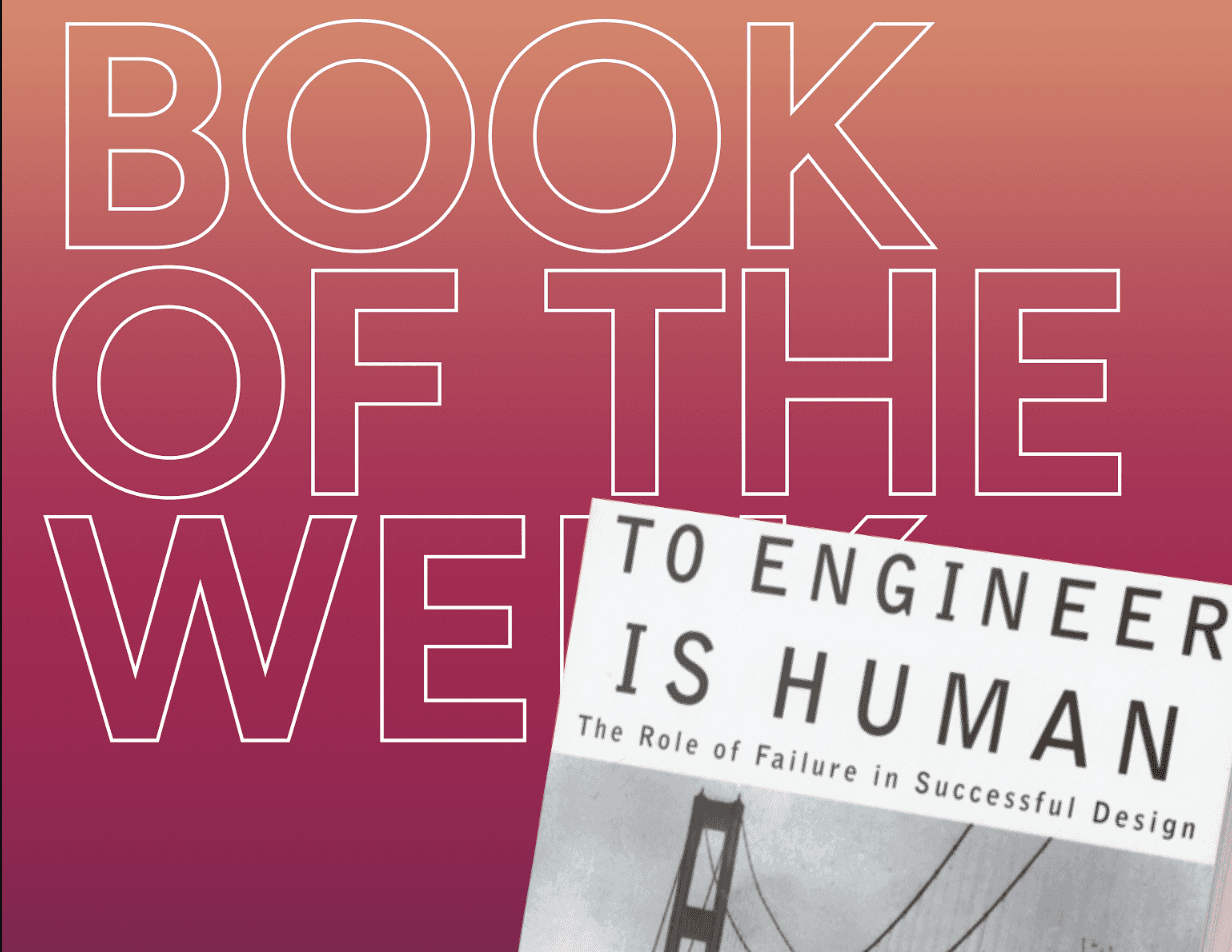
Book of the Week: To Engineer Is Human
Rafiq Omair
1. Quick Overview
Author: Henry Petroski
First published: 1985
Reading Level: First-year engineering to professional
Why it’s worth reading: Shows how failure analysis is not a side topic, it is core engineering thinking.
2. What It’s About
This book is a tour through the way real engineering learns, by studying what breaks, what collapses, what underperforms, and what surprises us. Petroski explains that design is never just calculation; It is also judgement under uncertainty, tradeoffs, incomplete information, and constraints that change mid-project.
Instead of presenting failure as embarrassment, he treats it as data. You see how small assumptions can cascade into big outcomes, why safety factors and codes exist, and why engineers obsess over details that look “minor” from the outside. The big idea is simple: engineering progress is built on learning, and learning often comes from things that did not go as planned.
3. Memorable Moment or Takeaway
Good engineers do not fear failure. They study it, document it, and design so it is less likely to repeat.
4. Where to Find It
Commonly available through libraries and major booksellers.
5. If You Liked This Book...
Structures: Or Why Things Don’t Fall Down by J.E. Gordon
The Perfectionists by Simon Winchester
6. If You Want to Go Deeper
Read Design Paradigms: Case Histories of Error and Judgment in Engineering by Henry Petroski. It is more case-study heavy and pushes further into how errors and blind spots show up inside “successful” designs.