What's Buzzing
Jan 12, 2026
Inside ForceN: The Company Giving Robots Touch
Rafiq Omair
Robots are getting smarter. Cameras are getting sharper. AI is getting wild.
And yet, we have all seen a robot reach for something simple, hesitate, squeeze too hard, or just kind of… panic and reset.
When we chatted with Robert Brooks, founder and CEO of ForceN, it clicked why that happens: robots can “see,” but they still struggle to “feel.”
Robert’s whole mission is to fix that.
The “why can’t robots do this like we do?” moment
Robert did his undergrad at the University of Waterloo in mechatronics, back when it was still a brand-new program.
Then he went full engineering buffet: nuclear, heavy industry, early logistics robots, consumer electronics, pharma automation, and eventually surgical robotics research at U of T and SickKids.
At SickKids, they were building early surgical robots and even trying to teach a robot to suture using machine vision and early AI.
But there was a stubborn gap: force feedback.
Robert described it in the most relatable way possible. When we pick up a coffee cup, we look at it, reach for it, and then we can literally look away and keep talking while our hand handles the rest. That is tough to do the work.
And if we want to find something in a messy bag, we do not set up studio lighting and eight cameras. We just stick our hand in and feel around.
So Robert asked the question that became the spark for ForceN: if humans rely on touch this much, why are we trying to build robot manipulation mostly with vision?
Why ForceN started in healthcare first
Here’s where Robert got very real. If a robot squishes produce, someone is annoyed. If a robot squishes something in a surgical setting, the stakes are completely different.
That “high-stakes need” is why ForceN started with healthcare robotics, where precision and reliability are non-negotiable, and where solving touch is not a nice-to-have; it is a must-have.
Then, as other robotics markets got more mature, ForceN expanded beyond surgery into logistics and more general robotics work, because suddenly more robots were attempting real manipulation tasks in messy environments.
So what is ForceN actually building?
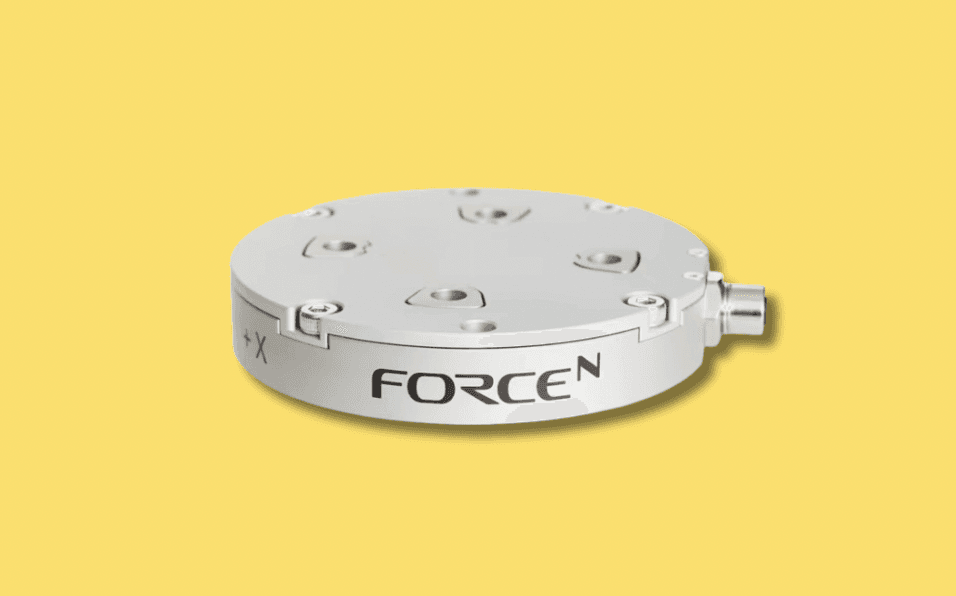
ForceN builds force/torque sensing systems that help robots “feel” contact and load in a way that is stable, robust, and practical to integrate.
On their product page, they describe development systems like a 6-degree-of-freedom wrist force/torque sensor designed with surgical systems and humanoids in mind, with integration options like EtherCAT or EtherNET.
They also highlight systems aimed at logistics workflows like “pick, weigh in-motion, and place,” which matters a lot when you want robots to move fast but still handle variation safely.
If you want a quick outside perspective, The Robot Report described ForceN’s Development Kit as multi-axis force-torque sensors plus software, algorithms, and APIs, built to make integration and testing easier across 1, 3, and 6 DoF systems.
For students who like the big picture, here’s the vibe: ForceN is trying to make touch a standard tool in the robotics toolbox, not an exotic research add-on.
The entrepreneurship decision (and the logic behind it)
Robert did not come out of grad school thinking, “I want to be a CEO.”
He went into his Master’s (that turned into a PhD), aiming for roles like VP of Research or CTO, and companies like Intuitive or Boston Dynamics were absolutely on his radar.
But near the end, he looked around and saw a pile of unsolved problems that people were not tackling, especially in sensing. So he made a very engineer-shaped bet:
If he solved a real problem and it became a company, great. If it did not, the tech would still be valuable, and he would still have strong options.
We love this framing because it is not a “blind leap into startup life.” It is “build something real, and let reality guide you.”
Hiring advice we want taped to every student team’s wall
Robert likes co-ops and internships because you get to see how someone actually executes, not just how they interview. He mentioned that a meaningful chunk of ForceN’s team came through that pipeline.
But his best “tell” in an interview is simple:
Ask someone about a project, and then ask what went wrong.
If they say nothing went wrong, they either were not pushing hard or they are not being straight with you. The best candidates can explain failures, root cause them, and tell you what they learned.
That is how you find people who level up fast, and in a fast-moving industry, the fast learners become your strongest engineers.
Canada vs the US, and the “organize the resources” rally cry
Robert’s view of Canada was not negative. It was frustrating, in a motivating way.
He thinks Canada has great investors and resources, but the organization is not efficient, and the scale difference compared to Silicon Valley is massive.
He pointed to Quebec as a practical example: if investors are physically clustered and deal flow is easier to access, founders move faster. He even talked about how in Montreal, you can walk around a single building and hit a big slice of the VC ecosystem.
And his punchline was clear: if Canada wants to keep top engineering talent, we need more cool companies to work at, and we need to make it easier for those companies to get funded and grow.
What we are taking from this (and what we hope you take too)
Our biggest takeaway from Robert: the next leap in robotics is not only about better AI models or better cameras. It is about interaction. Real-world contact. Real-world uncertainty. Real-world touch.
And for anyone building, here are the practical lessons we are stealing immediately:
Build with empathy. Talk to customers early and often.
Get comfortable with the brutal feedback loop. It is how you find the truth fast.
When hiring, look for people who can explain what went wrong and what they learned.
If we want Canada to win in robotics, we need coordination, speed, and more ambitious companies that keep talent here.
Robots are not just going to “see” the world. They are going to touch it, handle it, and work in it. And if ForceN has its way, that future is going to feel a whole lot more capable.