Explainers
Jun 15, 2026
From Sunlight to Socket: How Solar Panels Turn Light Into Electricity
Rafiq Omair
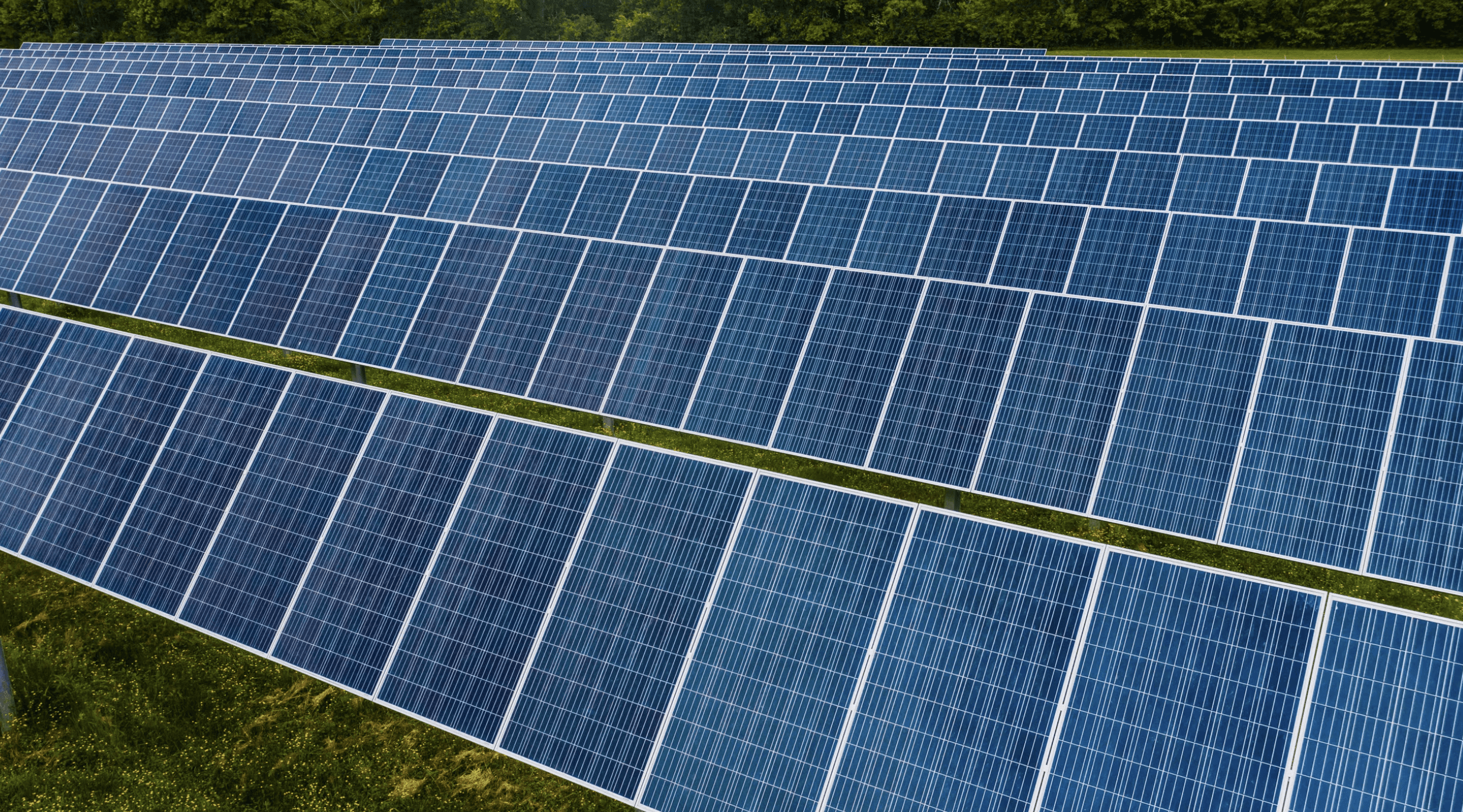
Stand outside on a clear afternoon and the sun is dumping roughly a kilowatt of power onto every square meter of ground around you. Free, silent, no moving parts required. A solar panel is one of the few human inventions that takes that flood of energy and turns it into something we can actually use.
The interesting question is how. Light goes in, electricity comes out, and there is nothing visibly mechanical in between.
Light is a stream of energy packets
Sunlight is electromagnetic radiation, and at the small scale it behaves like a stream of tiny energy packets called photons. Each photon carries a specific amount of energy that depends on its colour. Blue photons carry more energy than red ones. Ultraviolet photons carry more than blue, and infrared carries less than red.
When photons hit a material, three things can happen.
They pass through.
They bounce off.
They get absorbed, handing their energy to an electron in the material.
That third one is the only one that matters for solar cells.
The photovoltaic effect
Most solar cells are made of silicon, the same semiconductor that powers your phone's chip. As we covered in the semiconductor article, silicon can be doped with tiny amounts of other elements to create n-type silicon (extra free electrons) or p-type silicon (extra "holes" where electrons should be).
A solar cell is built by sandwiching a thin layer of n-type silicon on top of a thicker layer of p-type silicon. Where they meet, you get a p-n junction with a built-in electric field across the boundary.
Here is the trick.
A photon enters the cell and is absorbed by the silicon.
Its energy knocks an electron loose, leaving a hole behind. You now have a free electron and a free hole that can move.
The built-in electric field at the p-n junction pushes electrons one way and holes the other.
The electrons collect at the top of the cell, the holes at the bottom.
Connect a wire between the two sides and electrons flow through your circuit. That is your current.
That is the photovoltaic effect, and it is happening millions of times per second across every working solar cell.
From cell to panel to power
A single silicon solar cell only produces about half a volt. That is not enough to run anything useful.
So manufacturers wire many cells together in series to add up their voltages. A standard residential panel typically contains 60 to 72 cells producing somewhere between 30 and 50 volts. Then multiple panels are wired into strings and arrays to scale up the total power.
But there is still a problem. Panels produce DC electricity, and almost everything in your home runs on AC. So you need one more piece of hardware.
The inverter
A solar inverter takes the variable DC from your panels and converts it into clean AC at the voltage and frequency your grid expects (120/240 V at 60 Hz in North America). Modern inverters do far more than just flip waveforms.
They track the maximum power point of the panels as sunlight conditions change throughout the day.
They synchronize with the grid so the power you push out is in phase with everyone else's.
They monitor for faults and shut down safely if the grid goes down (anti-islanding).
They report performance data to apps and dashboards.
If a solar array is the muscle, the inverter is the brain.
Why solar panels are not 100% efficient
A typical silicon solar panel converts about 20% of the sunlight hitting it into electricity. The very best commercial silicon panels reach the mid-20s. Multi-junction cells used in satellites can hit 40% or more, but at much higher cost.
Several things eat into the rest.
Some photons are too low in energy to knock electrons loose and just pass right through, especially in the infrared range.
Some photons carry more energy than needed, and the excess gets dumped as heat once the electron is freed.
Reflection off the front surface bounces some light away before it ever enters the cell.
Recombination happens when freed electrons find a hole and quietly recombine before reaching the wire.
Resistance losses appear in the wiring and contacts on the cell itself.
There is a theoretical ceiling for a single-junction silicon cell called the Shockley-Queisser limit, which sits around 33%. Real cells operate below this because of practical losses. Stacking multiple materials with different bandgaps (called multi-junction cells) can push past it, but at much higher manufacturing cost.
What makes the modern boom possible
Solar panels were once exotic and expensive. The famous Vanguard 1 satellite in 1958 used solar cells that cost something like 300 dollars per watt in 1950s prices. Today residential modules cost well under a dollar per watt.
This drop is the result of several decades of compounding improvements.
Manufacturing scale played a huge role, since silicon wafer production for the semiconductor industry made cheap, high-purity silicon available at large volumes.
Process improvements like better deposition techniques, thinner wafers, better anti-reflective coatings, and clever cell architectures (PERC, TOPCon, heterojunction) have each squeezed out a few more percent of efficiency.
Global competition, especially massive Chinese investment in solar manufacturing, drove costs down faster than almost anyone predicted.
Soft costs have come down too, thanks to standardized panels, mounting hardware, and inverter electronics.
The result is that solar is now, in many regions, the cheapest source of new electricity ever built.
Why this matters
Solar power is no longer fringe. It is one of the largest and fastest growing sources of new electrical generation worldwide, and it sits at the centre of nearly every serious decarbonization plan.
For engineering students, solar opens doors in semiconductor physics, power electronics, materials science, electrical grid design, energy storage, and policy. Many of the hardest open problems in the energy transition are downstream of solar in one way or another.
Most importantly, solar is a clean engineering story. Light enters a piece of doped silicon. Electrons fall free. A field separates them. A wire collects them. An inverter shapes them. A grid absorbs them. The chain has very few moving parts, and yet it can run a country.