Explainers
Apr 17, 2026
Medical Imaging 101: How We See Inside the Body Without Opening It
Rafiq Omair
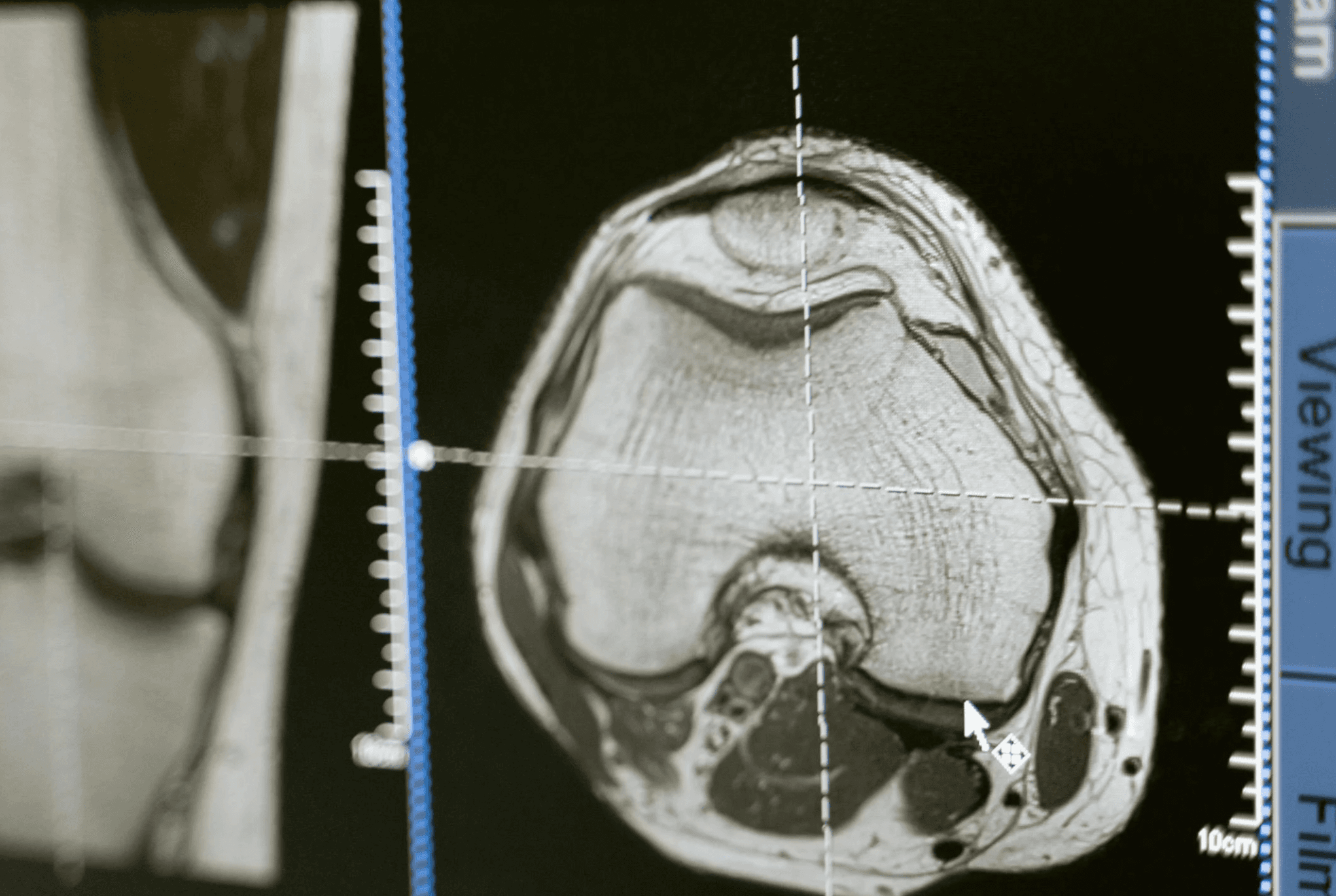
Medical imaging is one of the most impressive engineering achievements of the last century. We routinely look inside a living person, watch blood flow, map brain activity, and spot tumors smaller than a pea, all while the patient lies still and breathes.
If you want the simplest definition, medical imaging is the art of turning physical interactions inside the body into pictures we can interpret.
The universal imaging tradeoff
Every imaging method balances three things:
Resolution: how fine the details are
Contrast: how clearly different tissues separate
Noise and safety constraints: including time, radiation dose, and comfort
If you improve one, you often pay in another. That is why there is no single “best” scanner. Different problems demand different tools.
X-ray: shadow pictures with high-energy light
X-rays are a form of electromagnetic radiation that passes through the body. Dense materials like bone absorb more, so less reaches the detector. The result is a shadow image.
Great for:
bone fractures
chest imagingdental imaging
Limits:
Soft tissues can look similar, so contrast can be weak
involves ionizing radiation, so dose matters
CT: a 3D X-ray reconstruction
Computed tomography (CT) takes many X-ray projections from different angles and reconstructs a 3D volume.
The key concept here is reconstruction. You are not directly photographing a slice. You are measuring projections and solving an inverse problem.
Great for:
trauma assessment
detecting bleeding
fast whole body scans
Limits:
higher radiation dose than a single X-ray
artifacts from motion or metal implants
MRI: signals from spinning atoms
Magnetic resonance imaging (MRI) is the one that feels like science fiction.
In a strong magnetic field, certain atomic nuclei, mainly hydrogen in water and fat, align with the field. You disturb them with radiofrequency pulses, then measure how they relax back. Those relaxation behaviors differ across tissues, which creates contrast.
Great for:
brain and spinal cord imaging
soft tissue detail
many specialized contrast techniques
Limits:
slower than CT
expensive and sensitive to motion
not ideal for some implants and devices
loud, confined, and sometimes uncomfortable
Ultrasound: imaging with sound
Ultrasound sends high-frequency sound waves into the body and listens for echoes. Boundaries between tissues reflect sound differently, producing an image.
Great for:
pregnancy imaging
heart imaging (echocardiography)
guiding needles and procedures
portable and inexpensive imaging
Limits:
limited penetration in some body types
Image quality depends on the operator
air and bone block sound, making some regions hard to see
Nuclear imaging: PET and SPECT
PET (positron emission tomography) and SPECT (single photon emission computed tomography) use radioactive tracers that participate in biological processes. Instead of anatomy, you often get functional information, like metabolism or receptor activity.
Great for:
cancer staging and monitoring
brain and cardiac functional imaging
Limits:
radiation exposure from tracers
lower spatial resolution compared with CT or MRI
expensive and logistically complex
How engineers think about an image
An image is not just a picture. It is a measurement.
Engineers ask:
What is the signal source?
What physics shapes the signal in the body?How does the detector capture it?
What reconstruction or processing turns data into pixels?
What artifacts are likely, and how do we correct them?
This is why “image quality” is more than sharpness. It is about the reliability of the information the image claims to show.
Safety and ethics belong in the intro
Medical imaging is high impact. It directly affects decisions about surgery, medication, and diagnosis.
With X-ray and CT, we care about minimizing dose while preserving diagnostic value.
With MRI, we care about safety in strong magnetic fields and heating effects.
With nuclear imaging, we manage tracer dose and exposure.
With ultrasound, safety is generally strong, but responsible use still matters.
Why this matters for students
Medical imaging is where physics, signal processing, software, and human judgment collide. It is also a place where better engineering can genuinely change outcomes.