What's Buzzing
Dec 7, 2025
How Zylotex & Co-Founder Lelia Lawson Are Shaping Canada’s Sustainable Fiber Future
Rafiq Omair

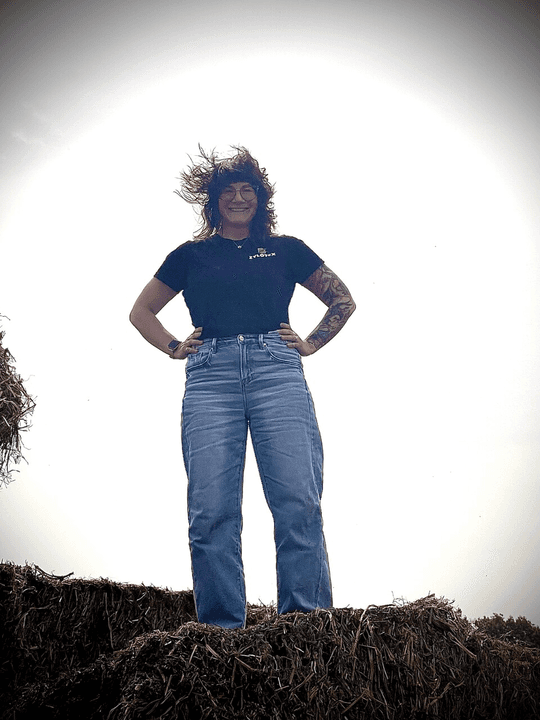
When you talk to Lelia Lawson, you can feel the quiet conviction of someone who has spent her life studying, refining, and believing in a better way to make the things we wear and use.
As the Founder and Chief Technology Officer of Zylotex, Lawson is leading a push for sustainable fiber manufacturing built on hemp, science, and a distinctly Canadian vision for supply chain independence.
From farm roots to fiber innovation
Lelia’s story starts in rural Alberta. She grew up hearing her mother’s memories of hemp fields cultivated during the Second World War for ropes, sails, and other essential materials. As an undergraduate at the University of Alberta, she returned to hemp in the lab, studying retting to break down lignin and pectin in bast fibers and testing tensile properties of individual filaments. That curiosity turned into a career that spans more than two decades in protective clothing, product development, and textile quality systems.

The Canadian textile gap
Canada produces only a sliver of global textile fiber, leaving the country reliant on imports. Lawson points to the vulnerability that creates for supply chains and to the opportunity in front of Canada as industrial hemp becomes more accessible. Much of the domestic crop is grown for oilseed, which makes the stalks coarse and hard to process for apparel.
“Our mission, and our goal, is to produce in Canada, from Canadian feedstock, for a global economy,” shared Lawson.
The question became how to turn Canadian hemp into a fine, versatile cellulose fiber at scale and with strong sustainability credentials. Independent coverage has echoed her focus on building a Canadian fiber industry and the 0.2 percent figure for Canada’s current contribution to global fiber production.
Science meets sustainability
Zylotex focuses on Lyocell, a man-made cellulosic fiber regenerated from cellulose using N-methylmorpholine N-oxide. Lawson’s PhD work helped optimize a pulping pathway that removes impurities to yield high-alpha cellulose suitable for solvent spinning.
Because bast fibers like hemp contain less lignin than wood, Lawson’s team reports that hemp can be pulped in roughly 80 percent less time, enabling lower energy inputs and fewer chemicals while producing a high-quality pulp. The result is a biodegradable fiber platform that avoids microplastic shedding and reduces pressure on forests.
The University of Alberta has separately reported progress toward industrial-level Lyocell prototyping and plans to run hemp and recycled textile feedstocks through the line.
Beyond fashion
While apparel gets the spotlight, Zylotex’s first markets are industrial and non-wovens. Think geotextiles, erosion control, filtration, and medical absorbents.
Europe is moving to reduce synthetics in these categories, and hemp Lyocell fits the need for strength, moisture management, and biodegradability.
Lawson also highlights a local recycling opportunity. Thousands of tons of blended cotton-nylon coveralls from Alberta’s oil and gas sector end up in landfills annually. The research team at the University of Alberta is exploring fiber separation and regeneration pathways to close that loop.
Building a Canadian supply chain
Zylotex was incorporated in April 2024 and became fully independent in mid-2025. The company has completed pilot production and is undergoing evaluations with European manufacturers.
The plan is to generate first revenues in the first half of 2026 through contracted manufacturing, then begin Canadian production in 2027. Early off-take agreements have already exceeded the initial target capacity of approximately 1,200 tons per year. Zylotex aims to reach 5,000 tons by 2030 and 20,000 tons by 2040, with an initial focus on non-wovens and geotextiles before expanding further into apparel value chains.
Policy, collaboration, and circularity
Lawson supports coalitions that are advancing next-generation fibers and circular systems in Canada, including Fashion Takes Action’s Canadian Circular Textiles Consortium and allied initiatives that encourage the shift to low-impact fiber sources and better end-of-life outcomes. She is also a Director of the Canadian Hemp Trade Alliance, which advances the hemp sector nationally.
“This has been an extremely rewarding experience… just being able to share this story and get the same sort of response from almost everybody I talk to. They're like, ‘You're doing this in Canada? That's amazing.’ That just inspires me to keep going,” Lawson said.
Entrepreneurship and the leap
Leaving a stable industry role to build a cleantech venture is never simple. Lawson describes a journey of wins and setbacks, grounded in a belief that the science is sound, the demand is real, and the impact is worth it.
Her advice for aspiring founders, particularly women in technical fields, is direct: take risks and seek support.
She credits mentorship and accelerator programs such as the University of Alberta’s ICE Incubator, Alberta Catalyzer Velocity, Elevate Women+, and the SVG Ventures Thrive Academy for helping her navigate early-stage growth.
“These programs help you realize you’re not alone. As a founder, you wear every hat—technical, marketing, HR, and sales—and having a network makes all the difference.”
Zylotex’s mission is larger than any single product. It is about building a resilient, circular economy where Canadian crops, researchers, and manufacturers work together. As Lawson puts it, hemp has the potential to solve the world’s textile supply chain problems, and the work to prove that can begin in Canada.