Explainers
Jun 5, 2026
Why Airplanes Stay Up: The Physics Behind Flight
Rafiq Omair
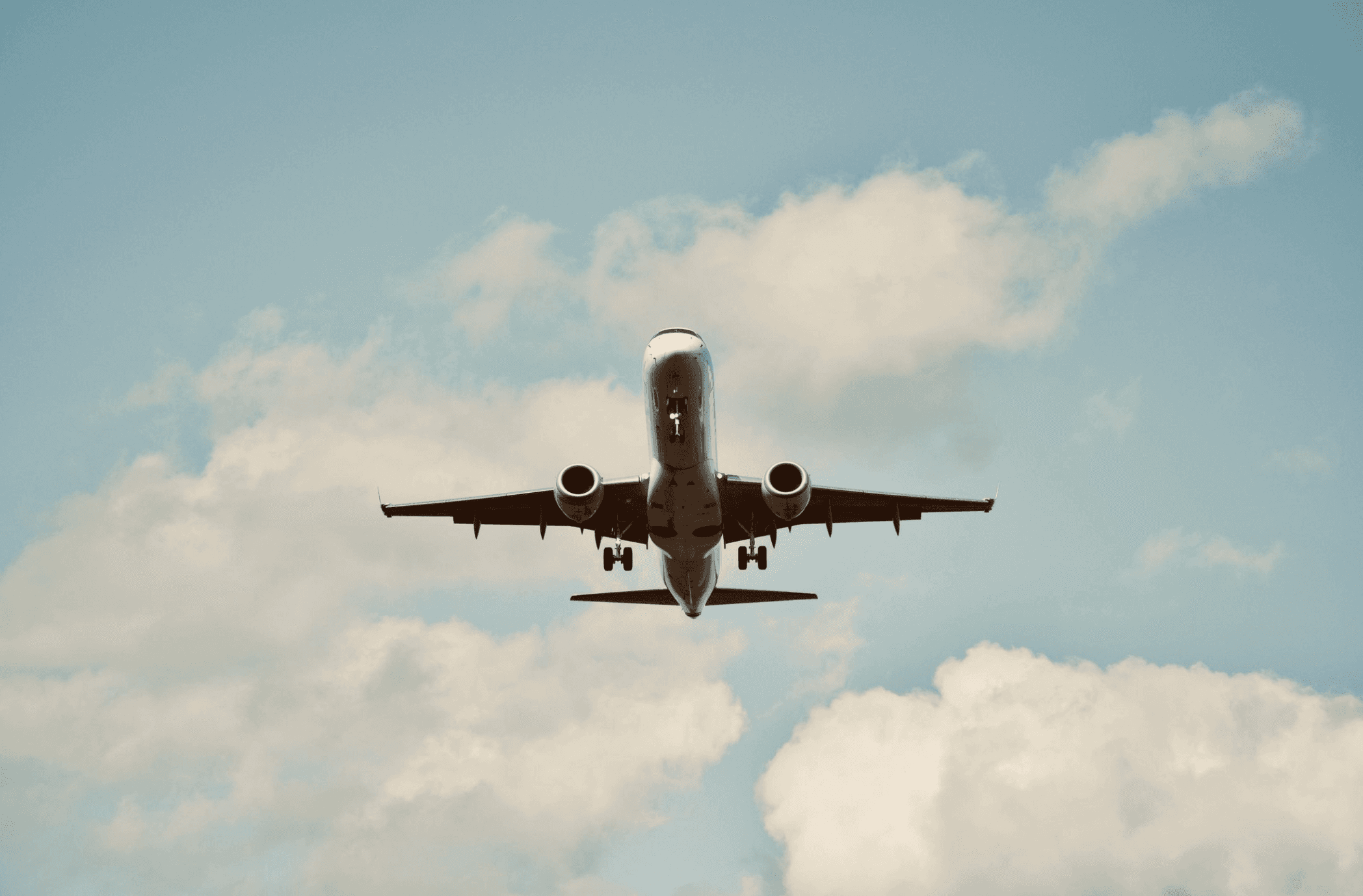
A Boeing 737 weighs about 70,000 kilograms empty. Load it with passengers, baggage, and fuel and the number climbs past 80,000. Then you ask it to leave the ground and stay up for hours, often at the same altitude as the peak of Mount Everest.
People board these things every day without thinking. That should be a small miracle, and the physics behind it is genuinely beautiful once you see it cleanly.
The four forces, very briefly
Anything flying in steady level cruise has four forces acting on it.
Lift: the upward force on the plane.
Weight: the downward pull of gravity.
Thrust: the forward push from the engines.
Drag: the backward resistance from the air.
In steady level flight, lift equals weight and thrust equals drag. Speed up, slow down, climb, descend, and the balance shifts. That is the high-level picture. The interesting question is where lift actually comes from.
How a wing makes lift
A wing makes lift by deflecting air downward. That is the clearest one-sentence explanation, and it is the one that holds up under scrutiny.
By Newton's third law, when the wing pushes air down, the air pushes the wing up. Every kilogram of air sent downward gives the wing a tiny upward kick. Multiply across the entire wing, and you get tonnes of lift.
There are two main ways a wing accomplishes this deflection.
Shape (camber): Most wings are curved on top and flatter on the bottom. As air flows over the wing, it follows that curve and bends downward as it leaves the trailing edge.
Angle of attack: Tilt the wing slightly nose-up relative to the oncoming air, and the bottom of the wing acts like a ramp, scooping air downward.
In practice, real wings use both. Shape gives you efficient lift at cruise, and angle of attack gives the pilot a way to adjust lift as conditions change.
The pressure story is the same story
You may have heard a different explanation involving low pressure on top of the wing and high pressure underneath. That version is also correct, just told from a different angle.
When air follows the curve over the top of the wing, it speeds up, and the local pressure drops. Underneath the wing, air slows slightly, and pressure stays higher. The net result is a pressure difference that pushes the wing upward.
Newton's law and pressure are not competing explanations. They are two sides of the same physical event. Air gets accelerated downward, which requires a force, and that force shows up as a pressure difference across the wing.
The myth of equal transit time
A common but incorrect explanation says that air on top has to travel a longer distance, so it speeds up to "meet" the air underneath at the trailing edge. This is not how air behaves.
Air on top really does move faster than air on the bottom, but not because of any rule about transit time. In fact, the air on top usually arrives at the trailing edge well before the air on the bottom. Pilots and aerodynamicists abandoned that explanation a long time ago, but it lingers in textbooks.
If a clean intuition helps: the wing pushes air down, and the air pushes back. That is it.
Why planes need to keep moving
A wing only makes lift when air is flowing past it. The faster the air moves over the wing (or the faster the wing moves through the air), the more lift it can generate.
The relationship looks roughly like this:
Lift = (something about air density) x (something about wing shape and angle) x (velocity squared)
The squared velocity term is the key one. Double your speed, and you get four times the lift. Halve your speed and lift drops by a factor of four. This is why takeoff and landing are the most delicate parts of a flight. The wing is operating close to the minimum speed where it can still hold the plane up.
Stalls: when lift quietly disappears
Lift increases with angle of attack, but only up to a point. Tilt the wing too far, and the smooth airflow over the top breaks up into messy, turbulent swirls. The wing stops deflecting air cleanly and stops producing meaningful lift.
This is a stall. It has nothing to do with the engines. A wing can stall at almost any speed if the angle of attack gets too high. Pilots train extensively to recognize and recover from stalls, and modern aircraft have sensors and warning systems that announce when one is coming.
Drag: the price of moving through air
Lift comes with a tax called drag. Anything pushing through air has to shove molecules out of the way, and that costs energy. There are two main types worth knowing:
Parasite drag: Comes from the basic friction of the air against the plane and from the way the shape disturbs the flow. It grows with speed.
Induced drag: A side effect of making lift in the first place. Wings that produce lift create swirling air at their tips called wingtip vortices, and those vortices represent energy that did not become useful lift.
Designers spend enormous effort minimizing both. The little turned-up tips you see on modern airliners, called winglets, are there to reduce induced drag and save fuel over long flights.
Why this matters beyond flying
The same physics that lifts a plane shapes how wind turbines harvest energy, how propellers move boats, how birds and insects fly, and how fans cool your laptop. Anywhere a surface moves through a fluid, the rules of lift and drag are in force.
For engineering students, flight is one of those topics where every undergraduate course converges. Fluid mechanics, materials, structures, controls, propulsion, thermodynamics, electronics, all of it shows up on a real airframe.
The next time a plane rolls down a runway and lifts off, you can watch it with a little more understanding. Eighty tonnes of metal do not float. It pushes a lot of air downward, very efficiently, very fast, and the air pushes back hard enough to fly.